The Gospel of Mark: A Clear Portrait of the Servant-King
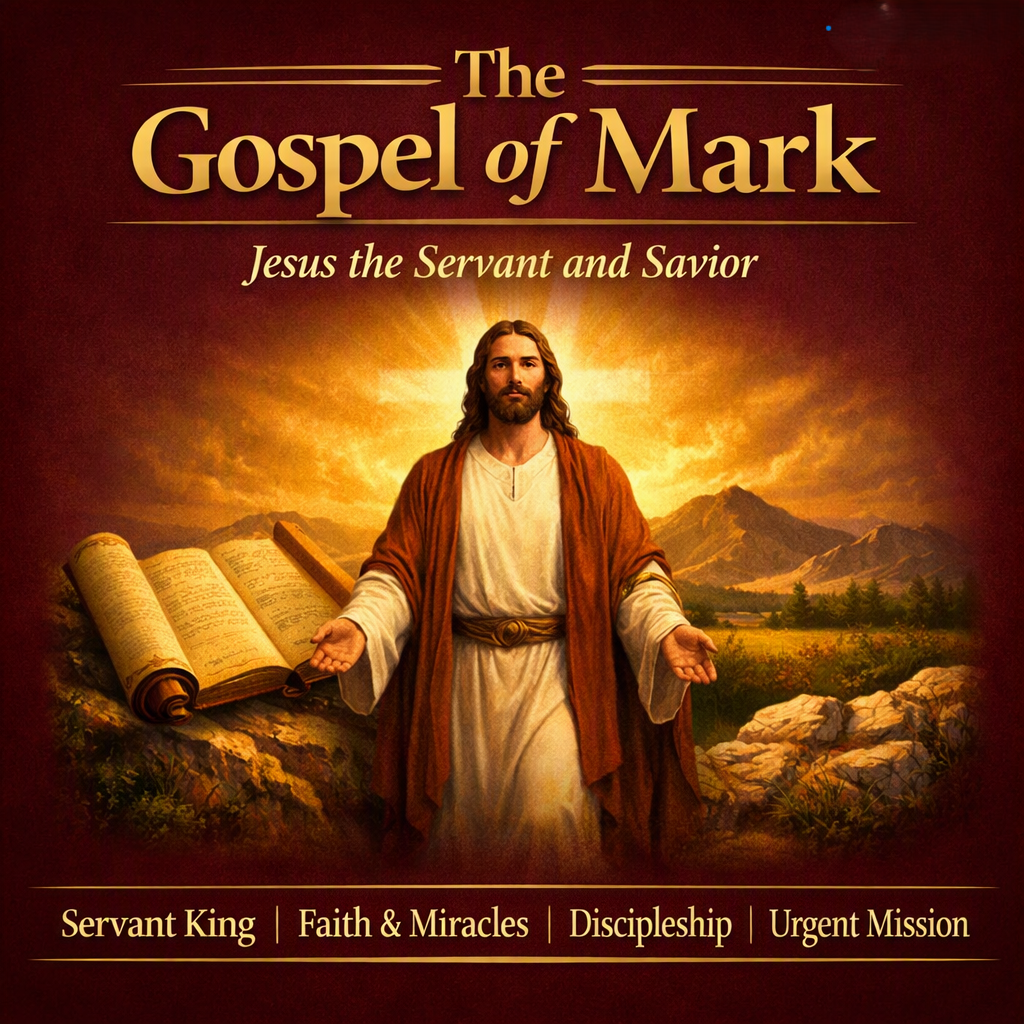
The Gospel of Mark - A Clear Portrait of the Servant‑King
Introduction
The Gospel of Mark is the earliest and most fast‑moving account of Jesus’ ministry. Written by John Mark, a close companion of Peter, it presents Jesus with urgency, clarity, and vivid detail. Mark’s goal is simple: show believers who Jesus is, what He came to do, and what it means to follow Him.
1. Authorship, Date, and Audience
John Mark, familiar to the early church and connected to both Peter and Paul, writes with the intensity of someone preserving eyewitness preaching. Most scholars date the Gospel to the late 50s or 60s, likely in Rome, where believers faced cultural pressure and rising persecution.
Mark’s audience is primarily Gentile Christians who needed encouragement, clarity, and a firm foundation for discipleship. His Gospel is intentionally straightforward, emphasizing action over lengthy teaching.
2. Purpose of the Gospel
Mark writes to reveal Jesus as the Servant‑King whose authority is unmatched and whose mission is centered on the cross. His purpose includes:
- Strengthening believers under hardship
- Clarifying Jesus’ identity and mission
- Calling disciples to courageous, self‑denying faith
- Showing that true greatness is found in serving
Mark’s Gospel is pastoral, practical, and deeply Christ‑centered.
3. Major Themes
Jesus the Servant
Mark highlights Jesus’ actions more than His speeches. The Gospel moves quickly from one moment of compassion, healing, or confrontation to the next. Jesus serves people in need, restores the broken, and confronts evil with authority.
Authority of Christ
Mark emphasizes Jesus’ authority over:
- Sickness
- Demons
- Nature
- Sin
- Religious tradition
Every scene reinforces that Jesus is not merely a teacher — He is the Son of God acting with divine power.
Discipleship
Mark presents discipleship as a path of obedience, humility, and endurance. The disciples often misunderstand Jesus, yet He patiently teaches them what it means to follow Him.
Key discipleship themes:
- Self‑denial
- Taking up the cross
- Serving others
- Trusting Jesus in uncertainty
The Cross
Mark’s Gospel moves steadily toward Jerusalem. The cross is not a tragic ending — it is the center of Jesus’ mission. Mark shows that Jesus came not to be served, but to serve and to give His life as a ransom for many.
4. Distinctive Features of Mark
Fast‑Moving Narrative
Mark uses “immediately” repeatedly, creating a sense of urgency. The Gospel feels like a rapid sequence of eyewitness moments.
Vivid Details
Mark includes small touches that reveal firsthand experience:
- Emotional reactions
- Specific gestures
- Crowds pressing in
- Personal expressions of faith
These details make the narrative feel alive and close.
The Messianic Secret
Jesus often instructs people not to reveal His identity. This theme highlights:
- The timing of God’s plan
- The danger of misunderstanding Jesus as only a miracle worker
- The need for the cross to define His mission
Focus on Suffering
Mark prepares believers for hardship by showing Jesus’ own suffering and the cost of discipleship. Faithfulness is not easy — but it is worth everything.
5. Why Mark Matters Today
Mark’s Gospel speaks powerfully to modern Christians:
- In a world of distraction, Mark calls us to urgent, active faith.
- In a culture that prizes comfort, Mark reminds us that true greatness is found in serving.
- In times of uncertainty, Mark shows that Jesus’ authority is steady and trustworthy.
- For believers facing pressure, Mark offers a Savior who understands suffering and leads with compassion.
Mark invites us to follow Jesus with courage, humility, and confidence in the Servant‑King who gave His life for us.
More in Articles
November 3, 2026
1 & 2 Corinthians Explained: Unity, Love, and God's GraceOctober 29, 2026
Ezekiel: Visions of Glory and a Heart RestoredOctober 29, 2026
The Book of Romans: Salvation, Grace, and Faith in Christ