1 & 2 Corinthians Explained: Unity, Love, and God's Grace
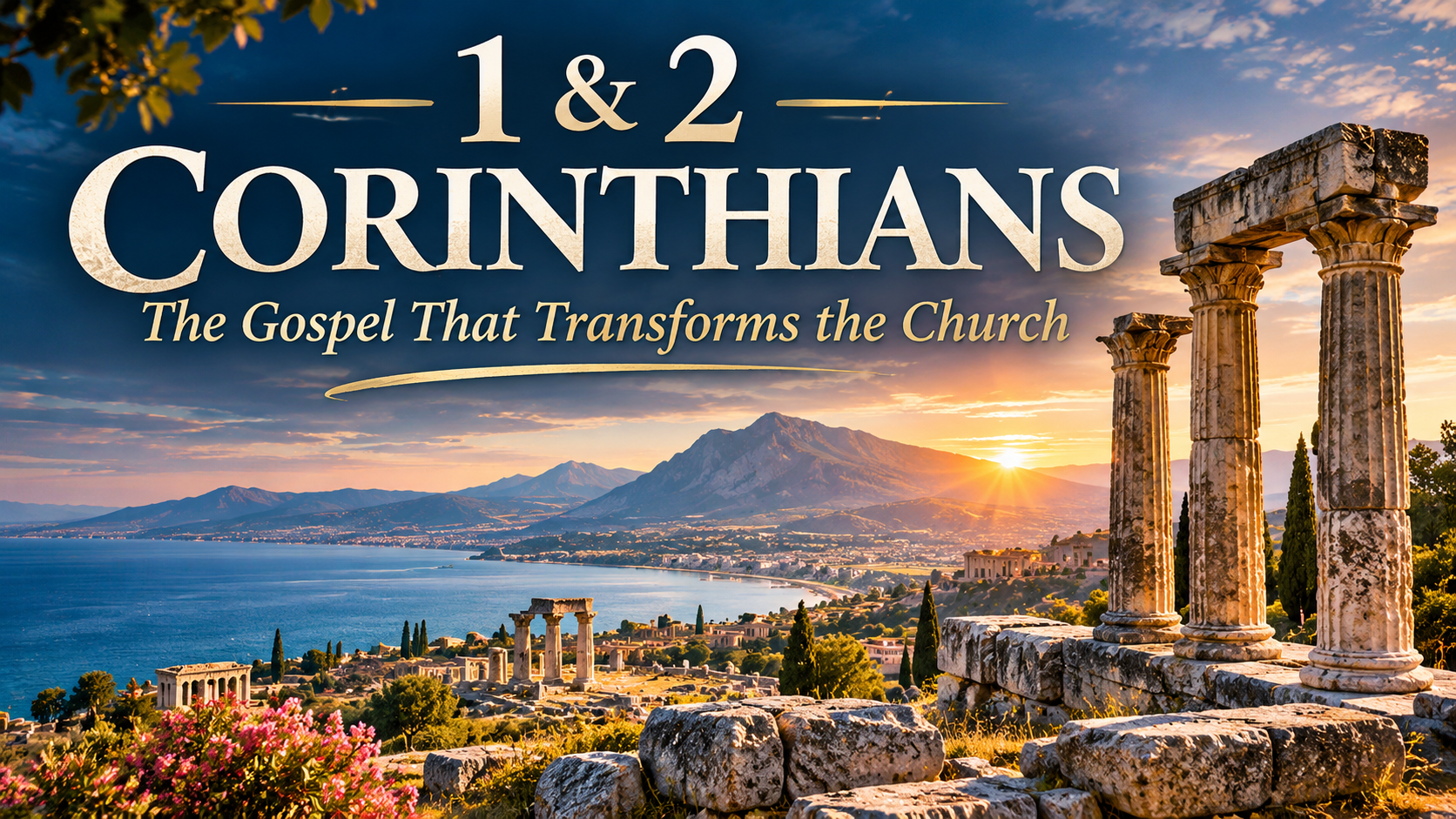
1 & 2 Corinthians: The Gospel That Transforms the Church
Among Paul’s letters, 1 and 2 Corinthians provide one of the most honest pictures of a local church. The believers in Corinth were enthusiastic, gifted, and growing, yet they faced serious struggles with division, immorality, pride, conflict, and confusion. Through these two letters, God preserved timeless instruction showing how imperfect people can be transformed by the power of Christ.
Corinth was a thriving city in ancient Greece, known for commerce, wealth, and cultural diversity. As a major crossroads of the Roman world, it attracted people from many backgrounds, philosophies, and religions. Into this environment Paul brought the gospel during his missionary journeys and established a congregation of believers. While the church experienced remarkable growth, it also reflected many of the challenges of the city around it.
In 1 Corinthians, Paul addresses numerous problems that had developed within the congregation. Members were dividing themselves into competing groups based on favorite leaders. Some tolerated serious sin, while others took fellow believers to court. Questions arose about marriage, Christian liberty, worship practices, spiritual gifts, and the resurrection of the dead.
Rather than offering merely practical advice, Paul continually points the church back to Christ. He reminds them that the message of the cross is the foundation of their faith. Human wisdom, personal achievement, and social status are insignificant compared to the saving work of Jesus. The church is called to unity because all believers belong to Christ. Every spiritual gift is given for building up the body, and genuine love must govern every action. The famous chapter on love, 1 Corinthians 13, remains one of the clearest biblical descriptions of Christian character and service.
2 Corinthians reveals a more personal side of Paul’s ministry. After sending his first letter and experiencing criticism from some within the church, Paul writes to defend the integrity of his apostleship and to restore his relationship with the believers. This letter opens a window into the heart of a servant of God who endured suffering, opposition, disappointment, and hardship for the sake of the gospel.
One of the major themes of 2 Corinthians is that God’s strength is demonstrated through human weakness. Paul explains that believers do not depend upon their own abilities but upon God’s grace. Even in trials and afflictions, God works to shape His people and display His power. The letter encourages Christians to view suffering not as evidence of God’s absence but often as an opportunity for His strength to become visible.
Together, these two letters emphasize several enduring truths. The church must pursue unity in Christ rather than division. Believers are called to holiness in a culture that often opposes God’s standards. Spiritual gifts are valuable only when exercised in love. True wisdom comes from God, not the world. Christian leadership is marked by humility and service, and God’s grace is sufficient for every challenge His people face.
The message of 1 and 2 Corinthians remains remarkably relevant today. Churches still face disagreements, moral challenges, questions about worship, and struggles over priorities. Individual Christians continue to wrestle with weakness, pride, suffering, and spiritual growth. Paul’s letters remind us that the answer is not human effort alone but a deeper commitment to Jesus Christ and His gospel.
Ultimately, 1 and 2 Corinthians proclaim that God builds His church through ordinary people who trust in an extraordinary Savior. Through the power of the cross, believers are transformed, united, and equipped to live for God in a complicated world. The same gospel that changed Corinth continues to change lives today.
Key Verse:
"But we preach Christ crucified: a stumbling block to Jews and foolishness to Gentiles, but to those whom God has called, both Jews and Greeks, Christ the power of God and the wisdom of God." (1 Corinthians 1:23-24)
Theme: Christ-Centered Living in a Broken World
Key Ideas: Unity, Holiness, Love, Spiritual Gifts, Grace, Weakness and Strength, Gospel Transformation.
More in Articles
November 3, 2026
1 & 2 Corinthians Explained: Unity, Love, and God's GraceOctober 29, 2026
Ezekiel: Visions of Glory and a Heart RestoredOctober 29, 2026
The Book of Romans: Salvation, Grace, and Faith in Christ